Skip to Main Content

Personalized rhinoplasty by nose type main visual: front-facing portrait of a woman showing facial proportions and nasal contour

Sugar Plastic Surgery

Tailored to Your Nose TypeRhinoplasty by Nose Type

SUGAR Rhinoplasty by Nose Type

Types of Rhinoplasty

Sugar Motto

Every Nose Type Presents Different Concerns

For Bulbous, Hump, Upturned, and Deviated Noses, the Right Design Starts with the Cause

Concerns and nose types differ from person to person, including a bulbous, hump, upturned, or deviated nose. Rhinoplasty by nose type at SUGAR Plastic Surgery does not force every nose into a single technique. We use 3D-CT to identify the cause, then refine the bridge, tip, and alae in harmony with your facial proportions. A board-certified plastic surgeon personally provides your consultation, surgery, and follow-up care.

# Low Nose
# Hump Nose
# Short Nose
# Long Nose
# Bulbous Nose

Types of Rhinoplasty

What Is Rhinoplasty by Nose Type?

Concerns and nose types differ from person to person, including a bulbous, upturned, hump, or deviated nose. Rhinoplasty by nose type designs the bridge, tip, and alae in harmony with your facial proportions and proposes an approach suited to the condition of your nose rather than applying a single technique to everyone.

Because the areas and materials that need correction differ by nose type, an accurate diagnosis is half the result. At SUGAR Plastic Surgery, we identify the type and its cause during consultation, then propose a plan tailored to you.

Nose Types

Explore Each Nose Type

Select the type that best describes your nose. You can review the definition, suitable candidates, procedure, and surgical information for each type.

About

What Is Low Nose Rhinoplasty?

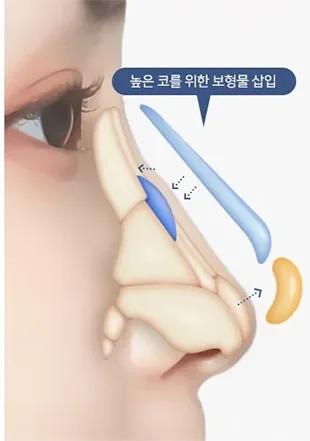
A low nose is one in which the bridge and tip appear low in relation to the forehead or lips when viewed from the side.
Bridge augmentation is one of the most commonly performed rhinoplasty procedures and raises a low bridge,
Raising a low nose is generally called augmentation rhinoplasty. A low bridge can make the face appear flat or less refined, so correction may improve overall balance.

Sugar Point

SUGAR Plastic Surgery considers 5 nasal angles—the radix, supratip break, tip, columellar break, and nasolabial angle—to pursue a natural, harmonious shape rather than focusing only on bridge height.

Who Needs It

You may wish to consider this procedure if you have these concerns

01Low Nasal BridgeIf a small nose and low bridge make the face look flat, we raise both the bridge and tip to add definition.
02A Wide-Looking Area Between the EyesIf a low bridge makes the area between the eyes look wide, we define the starting point of the nose to create a clearer, more refined impression.
03Lack of Facial DefinitionIf a low bridge makes the face look flat, we design a height suited to your facial proportions.
04A Relatively Prominent-Looking MouthIf a low nose makes the mouth appear prominent, we balance the profile by considering both tip height and the nasolabial angle.

Surgical Method

Low Nose Rhinoplasty Procedure

Low Nose Rhinoplasty 01 Before Surgery01 · Before SurgeryThrough a 1:1 consultation, we select the surgical technique and implant and create a personalized design.
Low Nose Rhinoplasty 02 Dissection and Pocket Creation02 · Dissection and Pocket CreationAfter the incision, the periosteum over the nasal bones is dissected to create a pocket for the bridge implant.
Low Nose Rhinoplasty 03 Implant Placement03 · Implant PlacementSeptal or ear cartilage is used to elevate the tip, and a shaped implant is placed along the bridge before the tip is refined.
Low Nose Rhinoplasty 04 After Surgery04 · After SurgeryWe complete an ideal nasal contour and shape.

About

What Is Hump Nose Rhinoplasty?

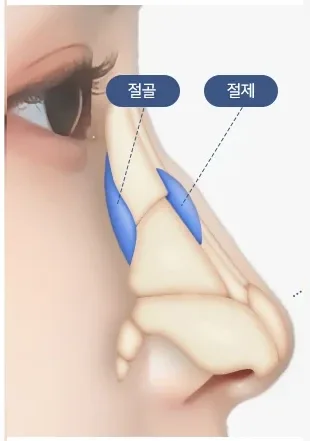
A hump nose has a protrusion along the middle of the nasal bridge, most often caused by overgrowth of bone or cartilage. When the tip points downward, the profile can resemble a bird's beak. A hump nose may create an older-looking or stern impression.

Sugar Point

Hump nose correction does not always require osteotomy. Because the appropriate technique differs by type, surgery should be performed by a specialist with a thorough understanding of nasal anatomy.

Who Needs It

You may wish to consider this procedure if you have these concerns

01Protruding Middle BridgeIf a protrusion in the middle of the bridge creates an uneven line, we refine the hump to smooth the contour.
02A High, Irregular Nasal BridgeIf the bridge is high but uneven, we preserve the height while smoothing the contour.
03A Nasal Bridge Changed by TraumaIf trauma has made the bridge irregular, we accurately assess its condition before planning correction.
04Mild Dorsal HumpEven a small hump may be considered for limited correction if it affects your overall impression.
05A Dorsal Hump with Wide Nasal BonesWhen a dorsal hump is accompanied by wide nasal bones, osteotomy may also be considered to refine the bridge width.

Surgical Method

Hump Nose Rhinoplasty Procedure

Hump Nose CASE 1 Hump ReductionCASE 1 · Small Dorsal HumpIf the hump is mild, only the protruding area is lightly reduced and the drooping tip is elevated.
Hump Nose CASE 2 Implant PlacementCASE 2 · Low Nose with a HumpThe hump is refined, the drooping tip is elevated, and an implant is used to augment the low bridge.
Hump Nose CASE 3 OsteotomyCASE 3 · Hump with a Large NoseLateral osteotomies are performed to narrow the splayed nasal bones, after which the tip is elevated.

About

What Is Short Nose Rhinoplasty?

A short nose, sometimes called a 'pig nose,' can contribute to a youthful appearance but may also make the face look flat and wide. Correction is a technically demanding procedure because it must account for nose lengthening, nostril exposure, and the nasolabial angle. It should be performed by a specialist with a thorough understanding of nasal anatomy.

Sugar Point

SUGAR Plastic Surgery's short-nose, or upturned-nose, rhinoplasty improves excessive nostril show when the face is viewed from the front.

Who Needs It

You may wish to consider this procedure if you have these concerns

01Short Nose LengthIf the nose is shorter than 1/3 of the total face length, lengthening may be considered.
02Upturned Nasal TipIf the angle between the tip and upper lip is 110° or greater and appears upturned, we adjust the nasolabial angle to create a more natural angle.
03Visible NostrilsIf an upturned tip causes excessive nostril show from the front, the exposure is reduced.
04A Flat-Looking FaceIf a short nose makes the face look flat and wide, we balance its length and height.

Surgical Method

Short, Upturned Nose Rhinoplasty Procedure

Strong cartilage is used to rotate and support the alar cartilage downward. An additional cartilage graft is placed to shape the tip and help prevent drooping or deformity.

Short Nose Rhinoplasty Before Surgery01 · Before SurgeryThe upturned tip causes excessive nostril show.
Short Nose Rhinoplasty Cartilage Rotation and Reinforcement02 · Cartilage Rotation and ReinforcementStrong cartilage is used to rotate and support the alar cartilage downward, then an additional cartilage graft is placed to shape the tip.
Short Nose Rhinoplasty After Surgery03 · After SurgeryA stable contour is created to help prevent tip drooping and deformity.

About

What Is Long Nose Rhinoplasty?

A nose with a tip that extends downward like an arrowhead, appears longer when smiling, and may partly cover the philtrum is also called an arrow nose. It can result from an elongated septal cartilage that extends downward or from alar cartilage that points downward.

Sugar Point

The muscle that pulls the tip downward when smiling is divided while the drooping alar cartilage is rotated upward, bringing the tip higher and forward for a softer impression.

Who Needs It

You may wish to consider this procedure if you have these concerns

01Excessive Nose LengthIf the nose is longer than 1/3 of the total face length, its length is adjusted to improve facial proportions.
02Elongated SeptumIf the septum is excessively elongated, the overextended portion is trimmed to elevate the drooping columella.
03Drooping Nasal TipIf the tip droops downward, the alar cartilage is rotated upward to correct it.
04An Older-Looking ImpressionIf a long nose creates an older-looking impression, we refine the direction and length of the tip to create a softer appearance.

Surgical Method

Long Nose Rhinoplasty Procedure

When the tip is elongated and drooping, strong cartilage is used to rotate and support the alar cartilage upward. If needed, excess alar cartilage is trimmed to refine the shape. An excessively elongated septal cartilage may also be partially trimmed to elevate the drooping columella.

Long nose rhinoplasty anatomy before surgeryBEFORE · Before SurgeryThe elongated septum and alar cartilage create a drooping nasal tip.
Long nose rhinoplasty anatomy after surgeryAFTER · After SurgeryThe alar cartilage has been rotated upward and supported, while the elongated septum has been trimmed to elevate the columella.

About

What Is Bulbous Nose Rhinoplasty?

A bulbous nose has a rounded, blunt-looking tip. Possible causes include large or widely separated, flat alar cartilage, thick tip skin, or thick soft tissue beneath the skin. Because this can create a heavy or less refined impression, correction may be considered.

Sugar Point

By correcting the underlying causes, this surgery creates a slimmer, more defined nose and improves overall facial balance.

Who Needs It

You may wish to consider this procedure if you have these concerns

01Low, Splayed Nasal TipIf the tip is low, splayed, or drooping in relation to the bridge, the cartilage is brought together to create a more refined tip.
02Thick Nasal-Tip SkinIf the tip skin and soft tissue are thick, subcutaneous-fat refinement may be considered together with tip surgery.
03A Wide, Splayed Nasal TipIf the tip looks wide and splayed, the alar cartilage is refined to narrow the tip.
04A Nasal Tip That Became Blunt After SurgeryIf the tip became blunt after previous nasal surgery, we assess its condition and plan correction.

Surgical Method

Bulbous Nose Rhinoplasty Procedure

Bulbous Nose CASE 1 Before and after correction of separated alar cartilageCASE 1 · Separated CartilageThe nasal cartilage is brought together at the center and sutured to create a more defined tip.
Bulbous Nose CASE 2 Before and after correction of thick nasal-tip skinCASE 2 · Thick SkinSubcutaneous fat is removed, and the tip is raised and narrowed using septal cartilage, ear cartilage, or another suitable material.
Bulbous Nose CASE 3 Before and after correction of wide, enlarged alar cartilageCASE 3 · Large Alar CartilageThe alar cartilage is trimmed, leaving 6–8 mm, to reduce its size. The cartilage is brought together and sutured, or septal or ear cartilage is used to elevate the tip.

Rhinoplasty by Nose Type: Surgical Information

Surgery Time2 hours
AnesthesiaSedation anesthesia
Stitch Removal7 days
Return to Daily ActivitiesWithin 2 weeksVaries by individual

Why Sugar

Why Choose Rhinoplasty at SUGAR Plastic Surgery?

SUGAR Plastic Surgery approaches accurate assessment, personalized design, and postoperative care as one continuous rhinoplasty journey.

01

100% of surgeries performed by a board-certified plastic surgeon

The board-certified plastic surgeon who conducts your consultation also performs your surgery.
In accordance with Korean law requiring CCTV in operating rooms, our operating-room CCTV system is in operation,
protecting patients' rights.

02

1:1 Personalized Design Based on 3D-CT

Using 3D CT, we assess the nasal bones, cartilage, and skin thickness that cannot be seen externally
then design the bridge height and tip shape to suit your overall facial proportions.

03

Material Selection Suited to Your Nose

From silicone implants to ear cartilage, septal cartilage, and autologous rib cartilage,
we do not insist on a single material, but choose what suits your nasal condition and preferences.

Sugar Know-How

SUGAR Plastic Surgery's Rhinoplasty Expertise

These are the principles SUGAR Plastic Surgery follows in rhinoplasty.

01We Begin with an Accurate Diagnosis of Your Nose TypeDuring your consultation, we use 3D-CT to examine the nasal bones and cartilage and accurately identify the cause of your nose type.
02Designed Around 5 Nasal AnglesRather than considering bridge height alone, we create a natural, harmonious contour by accounting for the radix, supratip break, tip, columellar break, and nasolabial angle.
03Performed after preoperative testing under sedation anesthesiaAfter preoperative testing, surgery is performed while you are asleep under sedation anesthesia. Medication is used to manage pain and pressure during recovery.
04Care through recoveryAlong with swelling-reduction laser treatment, scar injections, vitamin injections, and dedicated 1:1 care, we provide wound care and follow-up checks according to a set postoperative schedule.
01We Begin with an Accurate Diagnosis of Your Nose TypeDuring your consultation, we use 3D-CT to examine the nasal bones and cartilage and accurately identify the cause of your nose type.
02Osteotomy Is Not Always RequiredThe surgical technique depends on the size of the hump and the overall bridge line. For a small hump, treatment may be limited to refining the protruding area.
03Performed after preoperative testing under sedation anesthesiaAfter preoperative testing, surgery is performed while you are asleep under sedation anesthesia. Medication is used to manage pain and pressure during recovery.
04Care through recoveryAlong with swelling-reduction laser treatment, scar injections, vitamin injections, and dedicated 1:1 care, we provide wound care and follow-up checks according to a set postoperative schedule.
01We Begin with an Accurate Diagnosis of Your Nose TypeDuring your consultation, we use 3D-CT to examine the nasal bones and cartilage and accurately identify the cause of your nose type.
02We Account for Nostril ExposureWe account for nose lengthening, nostril exposure, and the nasolabial angle to reduce excessive nostril show from the front.
03Performed after preoperative testing under sedation anesthesiaAfter preoperative testing, surgery is performed while you are asleep under sedation anesthesia. Medication is used to manage pain and pressure during recovery.
04Care through recoveryAlong with swelling-reduction laser treatment, scar injections, vitamin injections, and dedicated 1:1 care, we provide wound care and follow-up checks according to a set postoperative schedule.
01We Begin with an Accurate Diagnosis of Your Nose TypeDuring your consultation, we use 3D-CT to examine the nasal bones and cartilage and accurately identify the cause of your nose type.
02We Correct the Cause of DroopingWe identify causes such as the muscle that pulls the tip downward when smiling or downward-oriented alar cartilage, then rotate the tip upward to create a softer impression.
03Performed after preoperative testing under sedation anesthesiaAfter preoperative testing, surgery is performed while you are asleep under sedation anesthesia. Medication is used to manage pain and pressure during recovery.
04Care through recoveryAlong with swelling-reduction laser treatment, scar injections, vitamin injections, and dedicated 1:1 care, we provide wound care and follow-up checks according to a set postoperative schedule.
01We Begin with an Accurate Diagnosis of Your Nose TypeDuring your consultation, we use 3D-CT to examine the nasal bones and cartilage and accurately identify the cause of your nose type.
02A Different Approach for Each CauseThe technique is tailored to the cause of the bulbous tip, such as separated cartilage, thick skin, or large alar cartilage.
03Performed after preoperative testing under sedation anesthesiaAfter preoperative testing, surgery is performed while you are asleep under sedation anesthesia. Medication is used to manage pain and pressure during recovery.
04Care through recoveryAlong with swelling-reduction laser treatment, scar injections, vitamin injections, and dedicated 1:1 care, we provide wound care and follow-up checks according to a set postoperative schedule.


Procedure

SUGAR Plastic Surgery Rhinoplasty Process

011:1 Consultation with a SpecialistWe assess the treatment area and the condition of your skin and tissues, then discuss your desired outcome in detail.
02Personalized DesignWe consider your overall facial proportions and decide the surgical scope and technique together.
03Surgery Under SedationAfter preoperative testing, the procedure is performed under sedation anesthesia.
04Recovery CareAfter surgery, wound care and follow-up checks are provided according to a set schedule.

Materials

How Is the Material Selected?

01Silicone ImplantA widely used material for raising the bridge, shaped to suit each patient's bridge width and desired height.
02Ear Cartilage · Septal CartilageYour own ear and septal cartilage are used mainly at the tip to create a natural shape.
03Autologous Tissue (Non-Implant)If you are concerned about implants, you may consider non-implant rhinoplasty performed using only your own tissue.
04Autologous Rib CartilageAutologous rib cartilage may be considered for revision surgery or a contracted nose when greater support is required.

The most suitable material depends on the condition of your nose, and we will explain the options in detail during your consultation.

Recovery

Recovery Guide

Immediately After Surgery–1 WeekSwelling and bruising are most noticeable during this period. Gentle walking and compresses can help with recovery.
After 7 daysThe stitches and splint are removed.
2 weeks–1 monthAs major swelling subsides, daily activities begin to feel more natural.
AfterwardResidual swelling gradually subsides over several months as the final contour settles.

Recovery time varies by individual. All surgery carries the possibility of general side effects such as bleeding, infection, and inflammation, and results may vary. Please consult thoroughly with a specialist before surgery.

SAFETY INFORMATION

Rhinoplasty by Nose Type: Risks, Contraindications, and Emergency Warning Signs

For a safe treatment plan, please review the potential risks, the information we need before treatment, and the symptoms that require immediate medical attention.

Possible Side Effects

Possible risks include swelling, bleeding, infection, scarring, sensory changes, asymmetry, nasal obstruction, breathing discomfort, skin color changes, septal damage, and the need for revision surgery. The risks of movement, visibility, and contracture vary with the material used.

Contraindications and Precautions

Please tell us if you have a nasal condition such as rhinitis or sinusitis, breathing difficulties, a history of nasal surgery, fillers, or implants, an active infection, uncontrolled high blood pressure or diabetes, a bleeding disorder, a previous adverse reaction to anesthesia, a possibility of pregnancy, or if you smoke or take any medications or dietary supplements. Do not stop anticoagulants or other medications on your own; consult the prescribing clinician first.

Emergency Warning Signs

Contact the clinic immediately if you have a nosebleed that will not stop, suddenly worsening pain or swelling on one side, a change in nasal skin color, severe difficulty breathing, high fever, or pus. If breathing becomes extremely difficult or your level of consciousness changes, call 119 or go to the emergency room immediately.

This is general safety information and is not a substitute for individualized medical care. Actual risks and contraindications may vary depending on the procedure, products used, and your health.

Medical review scheduled: Dr. Jin-Hyung Kim, Board-Certified Plastic Surgeon · Content updated: August 18, 2026

FAQ

Frequently Asked Questions

A.

During your consultation, we use a detailed assessment, including 3D-CT, to determine whether you have a low, hump, short, long, or bulbous nose and explain the appropriate approach for that type. Because the surgical technique and recovery period differ by type, an accurate diagnosis is the first step in planning rhinoplasty.

A.

A bulbous nose is improved by refining the tip cartilage and soft tissue to create a more defined contour. The technique differs according to the cause, such as thick skin and soft tissue or widely separated cartilage, so we identify the cause through assessment before planning surgery.

A.

Bone reduction is not always required. Depending on the size of the hump and the overall bridge line, some cases can be corrected by refining only the hump without osteotomy. If the hump is large or the entire bridge requires correction, osteotomy may be included in the plan. The approach is determined after assessment.

A.

A nose-type label only describes outward appearance and does not determine the surgical technique by itself. We must examine skin thickness, cartilage and bone structure, nasal breathing, and the extent of change you want.

A.

We assess the amount of change the skin can accommodate, the material needed to support the tip, and the condition of the septum and airway to determine the areas and methods of correction.

A.

Noses that appear to be the same type can have different underlying causes, so we do not apply the same combination of procedures to everyone. We plan treatment only for the areas needed to address the cause and any functional discomfort identified during your examination.

Sugar Care System

SUGAR Plastic Surgery stays with you after surgery

01Plastic Surgery with Attention to Detail

Every step is handled with care, from an in-depth 1:1 consultation and precise diagnosis to operating-room CCTV monitoring and the selection of materials suited to you.

02SUGAR Reassurance Care

We closely support your recovery with swelling-reduction laser treatment, scar injections, vitamin injections, and dedicated 1:1 care.

03Surgical Care Guarantee

We remain by your side through every stage of postoperative follow-up.